I build the wholestack · surface to infra.
Not a frontend engineer who dabbles. React, TypeScript and micro frontends on the surface; PostgreSQL, Redis and Cassandra underneath; Docker, Jenkins, GitHub Actions and AWS carrying it to production. I design the data model, write the API, wire the pipeline and own the deploy.
Everything I ship is built SEO-friendly and performance-budgeted from the first commit — semantic markup, Core Web Vitals, server rendering where it earns its keep.
Download résuméPDF · 1 PAGE ↓
Five layers, one owner.
Most portfolios stop at the components. Mine keeps going down to the ingestion pipeline, the query engine and the deploy.
Data at scale
Log ingestion and search infrastructure for a security platform. Hot-search query paths on ClickHouse Cloud and BigQuery, multi-tenant schemas, and SQS pipelines kept healthy under load.
Frontend & micro frontends
Independently deployed React micro-frontends used by multiple product teams, with the design specs other teams plan features against.
Backend & APIs
A production FastAPI microservice for third-party API integrations that I own, plus REST APIs secured with JWT, OAuth and role-based access.
Cloud & DevOps
Containerised services on AWS, shipped through CI/CD and watched through telemetry, APMs and logs. Data restored from cold storage when incidents hit.
AI & LLM tooling
Growing applied experience with LLMs: AI agents and RAG pipelines over vector databases.
Where I've shipped.
GlobalLogic
CURRENTAssociate ConsultantArchitected and shipped React microapps on a micro frontend architecture — independently deployable modules across a distributed delivery pipeline serving multiple product teams.
Engineered the Exabeam Search Audit Dashboard, turning structured security audit data into diagnostic views that speed up triage, and a Kanban scheduling tool in React, Python, SQL and D3.
Owned REST and GraphQL integration end to end, built shared TypeScript component libraries, and authored the architecture documentation partner teams plan against.
Tata Consultancy Services
System EngineerDelivered the Risk Sensing UI Dashboard for Johnson & Johnson, surfacing risk intelligence across events, goods and materials from large structured datasets.
Raised automated test coverage to 90%, cutting production defects 45%, and led five developers through a React and Redux rewrite that improved functionality 35%.
Implemented Jenkins CI/CD with Nginx deployment configuration for automated analysis and validation, improving maintainability 15%.
Mantra Labs
Software EngineerBuilt the Renewal Management Portal for Care Health Insurance, integrating manual and auto-dialer systems into policy renewal workflows.
Designed authenticated REST APIs with JWT, OAuth and role-based authorization across a hierarchical permissions structure.
Investigated production telemetry, APM metrics and logs to catch defects early, and shipped AMP pages that extended reach on low-bandwidth connections.
Built outside the day job.
Grandmaster
Real-time multiplayer chess where each store does exactly one job: Redis holds session and live game state, Cassandra absorbs write-heavy match logs, PostgreSQL keeps relational user data, and WebSockets keep both players on the same board.

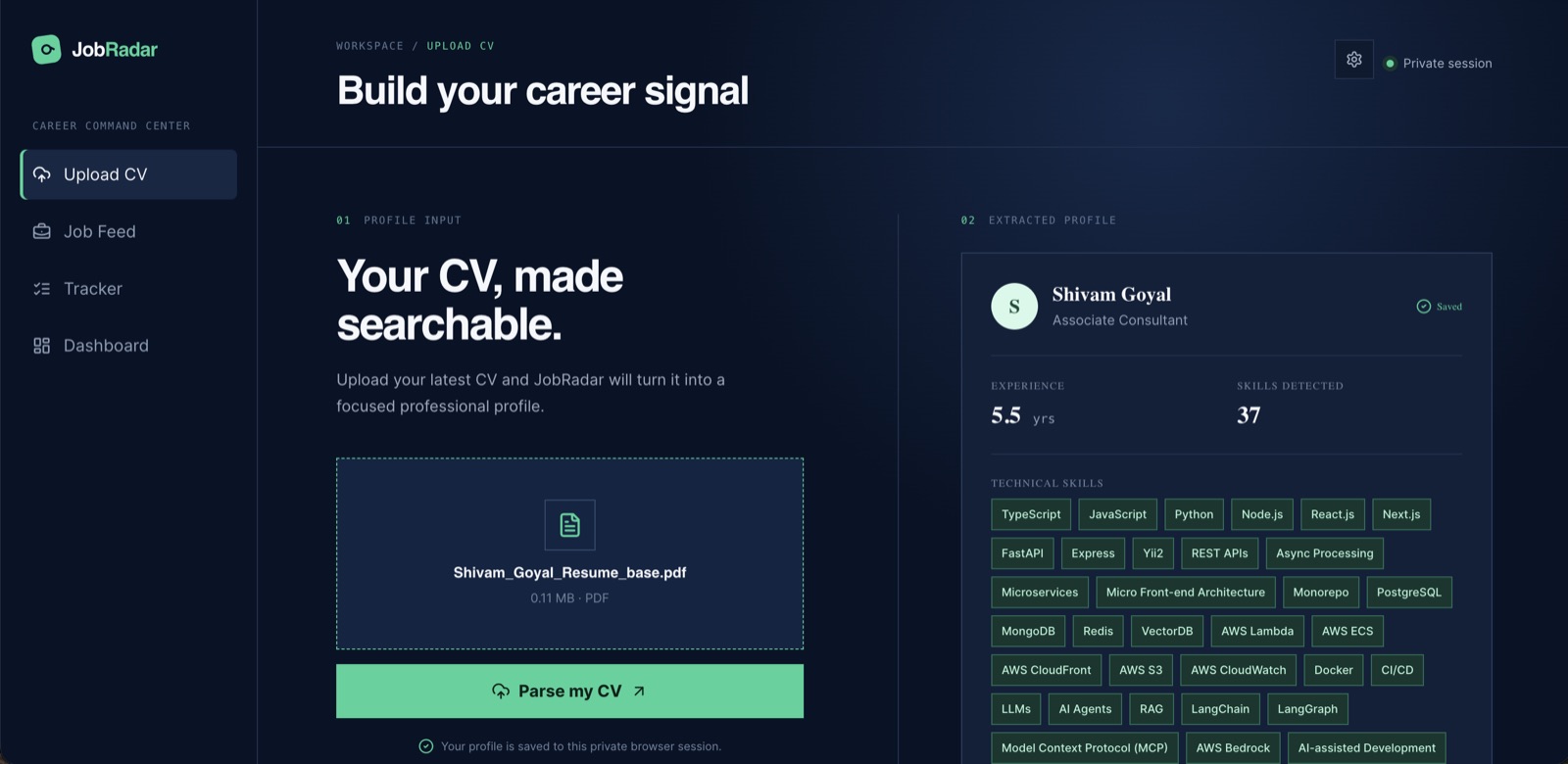
JobRadar ↗
Upload a CV and get a structured, searchable profile back: role, years of experience and every skill extracted, feeding a job feed, application tracker and dashboard.

Swoosh ↗
A Mac and Windows app that flies a small plane across your screen before every meeting, showing the subject and time left. Syncs with Google and Outlook calendars; fully click-through.
I write it down.
29 posts on Hashnode, mostly long-form: what I learned building something, or the JavaScript and systems fundamentals I wanted to explain properly.
Building a Production-Ready Multiplayer Chess App
The full write-up behind the Grandmaster case study: Redis, Cassandra, Postgres and WebSockets, and why each one is there.
Build Your Own OIDC Provider, Beginner to Advanced
Node.js, Express, PostgreSQL and oidc-provider — standing up real OpenID Connect rather than reaching for a hosted one.
Linux File System Hunting: 10 Discoveries
Ten things digging through the file system changed about how I read the operating system underneath my services.
Where AI helps, and where it doesn't.
Cursor and Claude Code are in the daily workflow behind a deliberate rule for when they accelerate delivery and when standard engineering rigor is required instead. Test coverage on shipped code stays mine either way.
Credentials.
A bit of background.
I lead teams as much as I write code: code-review standards, testing gates, and architecture documentation that gives partner teams something to plan against. Five developers through a legacy rewrite, a quality bar that became the team's, and the pipelines to keep it honest.
The work I like best sits where a messy dataset becomes a screen someone can make a decision from — and where the thing behind that screen stays fast under real traffic.